|
|
--- |
|
|
title: Animal Image Classification Using InceptionV3 |
|
|
emoji: 🐍 |
|
|
colorFrom: blue |
|
|
colorTo: red |
|
|
sdk: gradio |
|
|
sdk_version: 6.5.1 |
|
|
app_file: app.py |
|
|
pinned: false |
|
|
license: mit |
|
|
short_description: InceptionV3-based animal image classifier with data cleaning |
|
|
models: |
|
|
- AIOmarRehan/Animal-Image-Classification-Using-CNN |
|
|
datasets: |
|
|
- AIOmarRehan/AnimalsDataset |
|
|
--- |
|
|
|
|
|
[If you would like a detailed explanation of this project, please refer to the Medium article below.](https://medium.com/@ai.omar.rehan/building-a-clean-reliable-and-accurate-animal-classifier-using-inceptionv3-175f30fbe6f3) |
|
|
|
|
|
--- |
|
|
# Animal Image Classification Using InceptionV3 |
|
|
|
|
|
*A complete end-to-end pipeline for building a clean, reliable deep-learning classifier.* |
|
|
|
|
|
This project implements a **full deep-learning workflow** for classifying animal images using **TensorFlow + InceptionV3**, with a major focus on **dataset validation and cleaning**. Before training the model, I built a comprehensive system to detect corrupted images, duplicates, brightness/contrast issues, mislabeled samples, and resolution outliers. |
|
|
|
|
|
This repository contains the full pipeline—from dataset extraction to evaluation and model saving. |
|
|
|
|
|
--- |
|
|
|
|
|
## Features |
|
|
|
|
|
### Full Dataset Validation |
|
|
|
|
|
The project includes automated checks for: |
|
|
|
|
|
* Corrupted or unreadable images |
|
|
* Hash-based duplicate detection |
|
|
* Duplicate filenames |
|
|
* Misplaced or incorrectly labeled images |
|
|
* File naming inconsistencies |
|
|
* Extremely dark/bright images |
|
|
* Very low-contrast (blank) images |
|
|
* Outlier resolutions |
|
|
|
|
|
### Preprocessing & Augmentation |
|
|
|
|
|
* Resize to 256×256 |
|
|
* Normalization |
|
|
* Light augmentation (probabilistic) |
|
|
* Efficient `tf.data` pipeline with caching, shuffling, prefetching |
|
|
|
|
|
### Transfer Learning with InceptionV3 |
|
|
|
|
|
* Pretrained ImageNet weights |
|
|
* Frozen base model |
|
|
* Custom classification head (GAP → Dense → Dropout → Softmax) |
|
|
* EarlyStopping + ModelCheckpoint + ReduceLROnPlateau callbacks |
|
|
|
|
|
### Clean & Reproducible Training |
|
|
|
|
|
* 80% training |
|
|
* 10% validation |
|
|
* 10% test |
|
|
* High stability due to dataset cleaning |
|
|
|
|
|
--- |
|
|
|
|
|
## 1. Dataset Extraction |
|
|
|
|
|
The dataset is stored as a ZIP file (Google Drive). After mounting the drive, it is extracted and indexed into a Pandas DataFrame: |
|
|
|
|
|
```python |
|
|
drive.mount('/content/drive') |
|
|
|
|
|
zip_path = '/content/drive/MyDrive/Animals.zip' |
|
|
extract_to = '/content/my_data' |
|
|
|
|
|
with zipfile.ZipFile(zip_path, 'r') as zip_ref: |
|
|
zip_ref.extractall(extract_to) |
|
|
``` |
|
|
|
|
|
Each image entry records: |
|
|
|
|
|
* Class |
|
|
* Filename |
|
|
* Full path |
|
|
|
|
|
--- |
|
|
|
|
|
## 2. Dataset Exploration |
|
|
|
|
|
Before any training, I analyzed: |
|
|
|
|
|
* Class distribution |
|
|
* Image dimensions |
|
|
* Grayscale vs RGB |
|
|
* Unique sizes |
|
|
* Folder structures |
|
|
|
|
|
Example class-count visualization: |
|
|
|
|
|
```python |
|
|
plt.figure(figsize=(32, 16)) |
|
|
class_count.plot(kind='bar') |
|
|
``` |
|
|
|
|
|
This revealed imbalance and inconsistent image sizes early. |
|
|
|
|
|
--- |
|
|
|
|
|
## 3. Visual Sanity Checks |
|
|
|
|
|
Random images were displayed with their brightness, contrast, and shape to manually confirm dataset quality. |
|
|
|
|
|
This step prevents hidden issues—especially in community-created or scraped datasets. |
|
|
|
|
|
--- |
|
|
|
|
|
## 4. Data Quality Detection |
|
|
|
|
|
The system checks for: |
|
|
|
|
|
### Duplicate Images (Using MD5 Hashing) |
|
|
|
|
|
```python |
|
|
def get_hash(path): |
|
|
with open(path, 'rb') as f: |
|
|
return hashlib.md5(f.read()).hexdigest() |
|
|
|
|
|
df['file_hash'] = df['full_path'].apply(get_hash) |
|
|
duplicate_hashes = df[df.duplicated('file_hash', keep=False)] |
|
|
``` |
|
|
|
|
|
### Corrupted Files |
|
|
|
|
|
```python |
|
|
try: |
|
|
with Image.open(file_path) as img: |
|
|
img.verify() |
|
|
except: |
|
|
corrupted_files.append(file_path) |
|
|
``` |
|
|
|
|
|
### Brightness/Contrast Outliers |
|
|
|
|
|
Using PIL’s `ImageStat` to detect very dark/bright samples. |
|
|
|
|
|
### Label Consistency Check |
|
|
|
|
|
```python |
|
|
folder = os.path.basename(os.path.dirname(row["full_path"])) |
|
|
``` |
|
|
|
|
|
This catches mislabeled entries where folder name ≠ actual class. |
|
|
|
|
|
--- |
|
|
|
|
|
## 5. Preprocessing Pipeline |
|
|
|
|
|
Custom preprocessing: |
|
|
|
|
|
* Resize → Normalize |
|
|
* Optional augmentation |
|
|
* Efficient `tf.data` batching |
|
|
|
|
|
```python |
|
|
def preprocess_image(path, target_size=(256, 256), augment=True): |
|
|
img = tf.image.decode_image(...) |
|
|
img = tf.image.resize(img, target_size) |
|
|
img = img / 255.0 |
|
|
``` |
|
|
|
|
|
Split structure: |
|
|
|
|
|
| Split | Percent | |
|
|
| ---------- | ------- | |
|
|
| Train | 80% | |
|
|
| Validation | 10% | |
|
|
| Test | 10% | |
|
|
|
|
|
--- |
|
|
|
|
|
## 6. Model — Transfer Learning with InceptionV3 |
|
|
|
|
|
The model is built using **InceptionV3 pretrained on ImageNet** as a feature extractor. |
|
|
|
|
|
```python |
|
|
inception = InceptionV3( |
|
|
input_shape=input_shape, |
|
|
weights="imagenet", |
|
|
include_top=False |
|
|
) |
|
|
``` |
|
|
|
|
|
At first, **all backbone layers are frozen** to preserve pretrained representations: |
|
|
|
|
|
```python |
|
|
for layer in inception.layers: |
|
|
layer.trainable = False |
|
|
``` |
|
|
|
|
|
A custom classification head is added: |
|
|
|
|
|
* GlobalAveragePooling2D |
|
|
* Dense(512, ReLU) |
|
|
* Dropout(0.5) |
|
|
* Dense(N, Softmax) — where *N = number of classes* |
|
|
|
|
|
This setup allows the model to learn dataset-specific patterns while avoiding overfitting during early training. |
|
|
|
|
|
--- |
|
|
|
|
|
## 7. Initial Training (Frozen Backbone "Feature Extraction") |
|
|
|
|
|
The model is compiled using: |
|
|
|
|
|
* **Loss**: `sparse_categorical_crossentropy` |
|
|
* **Optimizer**: Adam |
|
|
* **Metric**: Accuracy |
|
|
|
|
|
Training is performed with callbacks to improve stability: |
|
|
|
|
|
* **EarlyStopping** (restore best weights) |
|
|
* **ModelCheckpoint** (save best model) |
|
|
* **ReduceLROnPlateau** |
|
|
|
|
|
```python |
|
|
history = model.fit( |
|
|
train_ds, |
|
|
validation_data=val_ds, |
|
|
epochs=5, |
|
|
callbacks=callbacks |
|
|
) |
|
|
``` |
|
|
|
|
|
This stage allows the new classification head to converge while keeping the pretrained backbone intact. |
|
|
|
|
|
--- |
|
|
|
|
|
## 8. Fine-Tuning the InceptionV3 Backbone |
|
|
|
|
|
After the initial convergence, **fine-tuning is applied** to improve performance. |
|
|
|
|
|
The **last 30 layers** of InceptionV3 are unfrozen: |
|
|
|
|
|
The model is then recompiled and trained again: |
|
|
|
|
|
```python |
|
|
history = model.fit( |
|
|
train_ds, |
|
|
validation_data=val_ds, |
|
|
epochs=10, |
|
|
callbacks=callbacks |
|
|
) |
|
|
``` |
|
|
|
|
|
Fine-tuning allows higher-level convolutional filters to adapt to the animal dataset, resulting in better class separation and generalization. |
|
|
|
|
|
--- |
|
|
|
|
|
## 9. Model Evaluation |
|
|
|
|
|
The final model is evaluated on a **held-out test set**. |
|
|
|
|
|
### Accuracy & Loss Curves |
|
|
|
|
|
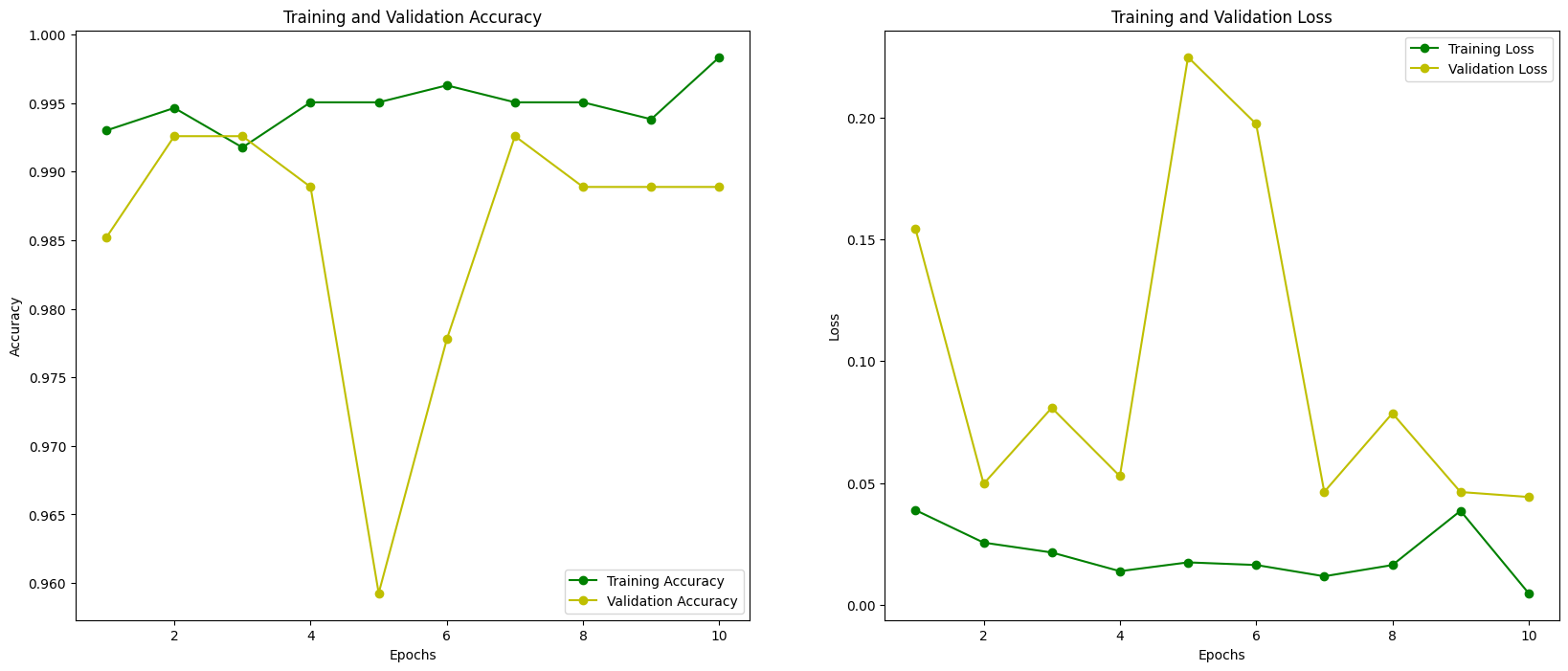
Training and validation curves are plotted to monitor: |
|
|
|
|
|
* Convergence behavior |
|
|
* Overfitting |
|
|
* Generalization stability |
|
|
|
|
|
These plots confirm that fine-tuning improves validation performance without introducing instability. |
|
|
|
|
|
 |
|
|
|
|
|
--- |
|
|
|
|
|
### Confusion Matrix |
|
|
|
|
|
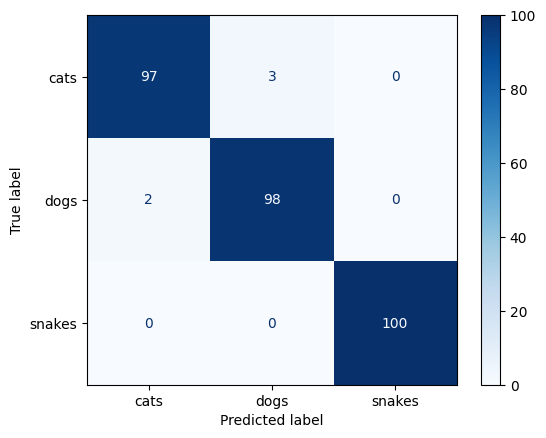
A confusion matrix is computed to visualize class-level performance: |
|
|
|
|
|
* Highlights misclassification patterns |
|
|
* Reveals class confusion (e.g., visually similar animals) |
|
|
|
|
|
Both annotated and heatmap-style confusion matrices are generated. |
|
|
|
|
|
 |
|
|
|
|
|
--- |
|
|
|
|
|
### Classification Metrics |
|
|
|
|
|
The following metrics are computed on the test set: |
|
|
|
|
|
* **Accuracy** |
|
|
* **Precision (macro)** |
|
|
* **Recall (macro)** |
|
|
* **F1-score (macro)** |
|
|
|
|
|
A detailed **per-class classification report** is also produced: |
|
|
|
|
|
* Precision |
|
|
* Recall |
|
|
* F1-score |
|
|
* Support |
|
|
|
|
|
This provides a deeper understanding beyond accuracy alone. |
|
|
|
|
|
``` |
|
|
10/10 ━━━━━━━━━━━━━━━━━━━━ 1s 106ms/step - accuracy: 0.9826 - loss: 0.3082 - Test Accuracy: 0.9900 |
|
|
10/10 ━━━━━━━━━━━━━━━━━━━━ 1s 93ms/step |
|
|
|
|
|
Classification Report: |
|
|
precision recall f1-score support |
|
|
|
|
|
cats 0.99 0.97 0.98 100 |
|
|
dogs 0.97 0.99 0.98 100 |
|
|
snakes 1.00 1.00 1.00 100 |
|
|
|
|
|
accuracy 0.99 300 |
|
|
macro avg 0.99 0.99 0.99 300 |
|
|
weighted avg 0.99 0.99 0.99 300 |
|
|
``` |
|
|
|
|
|
--- |
|
|
|
|
|
### ROC Curves (Multi-Class) |
|
|
|
|
|
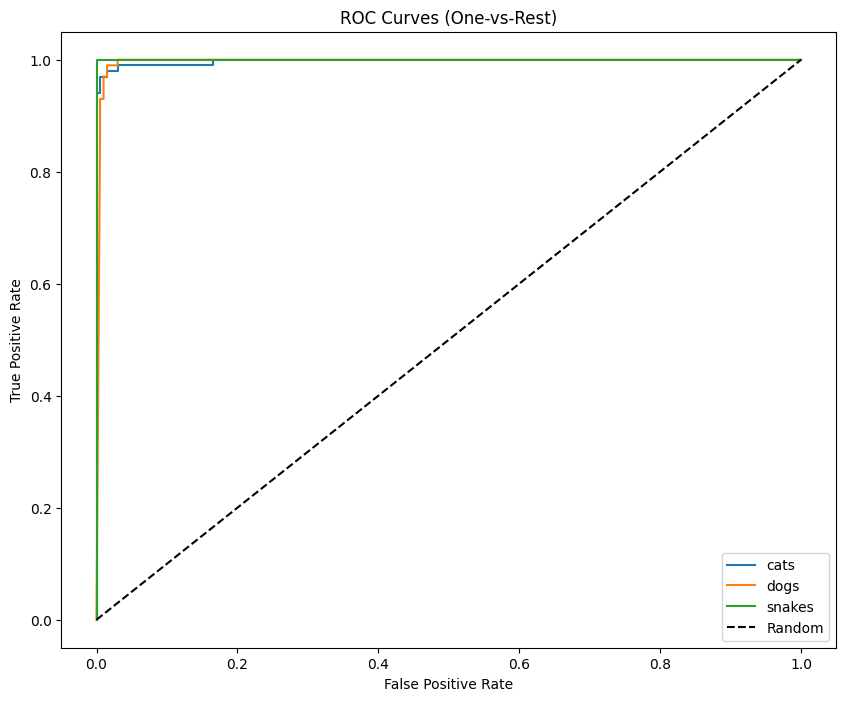
To further evaluate model discrimination: |
|
|
|
|
|
* One-vs-Rest ROC curves are generated per class |
|
|
* A **macro-average ROC curve** is computed |
|
|
* AUC is reported for overall performance |
|
|
|
|
|
These curves demonstrate strong separability across all classes. |
|
|
|
|
|
 |
|
|
|
|
|
--- |
|
|
|
|
|
## 10. Final Model |
|
|
|
|
|
The best-performing model (after fine-tuning) is saved and later used for deployment: |
|
|
|
|
|
```python |
|
|
model.save("Inception_V3_Animals_Classification.h5") |
|
|
``` |
|
|
|
|
|
This trained model is deployed using **FastAPI + Docker** for inference and **Gradio on Hugging Face Spaces** for public interaction. |
|
|
|
|
|
--- |
|
|
|
|
|
## Updated Key Takeaways |
|
|
|
|
|
> **Clean data enables strong fine-tuning.** |
|
|
|
|
|
By combining: |
|
|
|
|
|
* Rigorous dataset validation |
|
|
* Transfer learning |
|
|
* Selective fine-tuning |
|
|
* Comprehensive evaluation |
|
|
|
|
|
the model achieves **high accuracy, stable convergence, and reliable real-world performance**. |
|
|
|
|
|
Fine-tuning only a subset of pretrained layers strikes the optimal balance between **generalization and specialization**. |
|
|
|
|
|
--- |

