🧬 Darwin V6: Diagnostic-Guided Evolutionary Model Merging
We are releasing Darwin-31B-Opus — a reasoning-enhanced model merging Google's Gemma-4-31B-it and TeichAI's Claude Opus Distill using the Darwin V6 engine.
Conventional merging tools (mergekit, etc.) apply a single ratio to all tensors. Set ratio=0.5 and all 1,188 tensors blend identically, with no distinction between which tensors matter for reasoning versus coding.
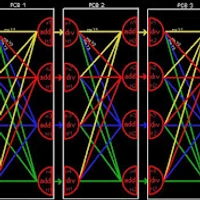
Darwin V6 diagnoses both parents at the tensor level before merging. It measures Shannon entropy, standard deviation, and L2 norm for every tensor, then passes 5 diagnostic probes (REASONING, CODE, MATH, KNOWLEDGE, LANGUAGE) through the model to determine layer-wise functional importance. Each of the 1,188 tensors receives an independent optimal ratio.
combined = static(entropy/std/norm) x 0.4 + probe(cosine_distance) x 0.6 final_ratio = mri_ratio x mri_trust + genome_ratio x (1 - mri_trust)
When one parent is overwhelmingly superior for a tensor (ratio < 0.15 or > 0.85), Darwin transplants it directly without interpolation. The mri_trust parameter itself is optimized by CMA-ES evolutionary search, so optimal transplant intensity is determined automatically. After merging, a Health Check compares the child against both parents layer-by-layer to detect interference or function loss.
🏟️ Smol AI WorldCup: A 4B Model Just Beat 8B — Here's the Data
We evaluated 18 small language models from 12 makers on 125 questions across 7 languages. The results challenge the assumption that bigger is always better.
→ A 1.3B model fabricates confident fake content 80% of the time when prompted with nonexistent entities. Qwen3 family hits 100% trap detection across all sizes.
→ Qwen3-1.7B (1.2GB) outscores Mistral-7B, Llama-3.1-8B, and DeepSeek-R1-14B. Latest architecture at 1.7B beats older architecture at 14B.
What makes this benchmark different?
Most benchmarks ask "how smart?" — we measure five axes simultaneously: Size, Honesty, Intelligence, Fast, Thrift (SHIFT). Our ranking metric WCS = sqrt(SHIFT x PIR_norm) rewards models that are both high-quality AND efficient. Smart but massive? Low rank. Tiny but poor? Also low.